
Why Heras Fence Panels Are Ideal for Temporary Events
The event site is temporary. The risks are not.
For a pop-up venue, a food festival or a stadium overspill, Heras fence panels can feel like the default choice. That's not just habit. They suit the pace, the unpredictability and the scrutiny that modern event builds attract in 2026.
They also fail in very predictable ways. Most of those failures have nothing to do with the panel itself.
Why Heras fence panels suit fast-turnaround events
The big advantage is speed. A competent crew can shift a perimeter line quickly when the site plan changes. That matters when a delivery gate needs moving or when the fire lane gets re-marked at short notice.
Mesh fencing also stays honest. You can see what's happening at the boundary. That makes stewarding simpler. It can also deter the casual opportunist, which is often enough.
If you're comparing temporary fencing solutions, start by admitting what the job is. You need something demountable. You need repeatable components. You need kit that survives hire cycles without drama.
It also helps that this style of mesh panel is a standard language on UK sites. Suppliers, installers and safety officers tend to recognise it immediately. That's not always true with improvised systems.
Don't confuse event use with Construction site fencing. The panel might look similar. The context is different. Crowd pressure, queue behaviour and access control drive the spec at events. (hse.gov.uk)
What makes the system work is the boring hardware
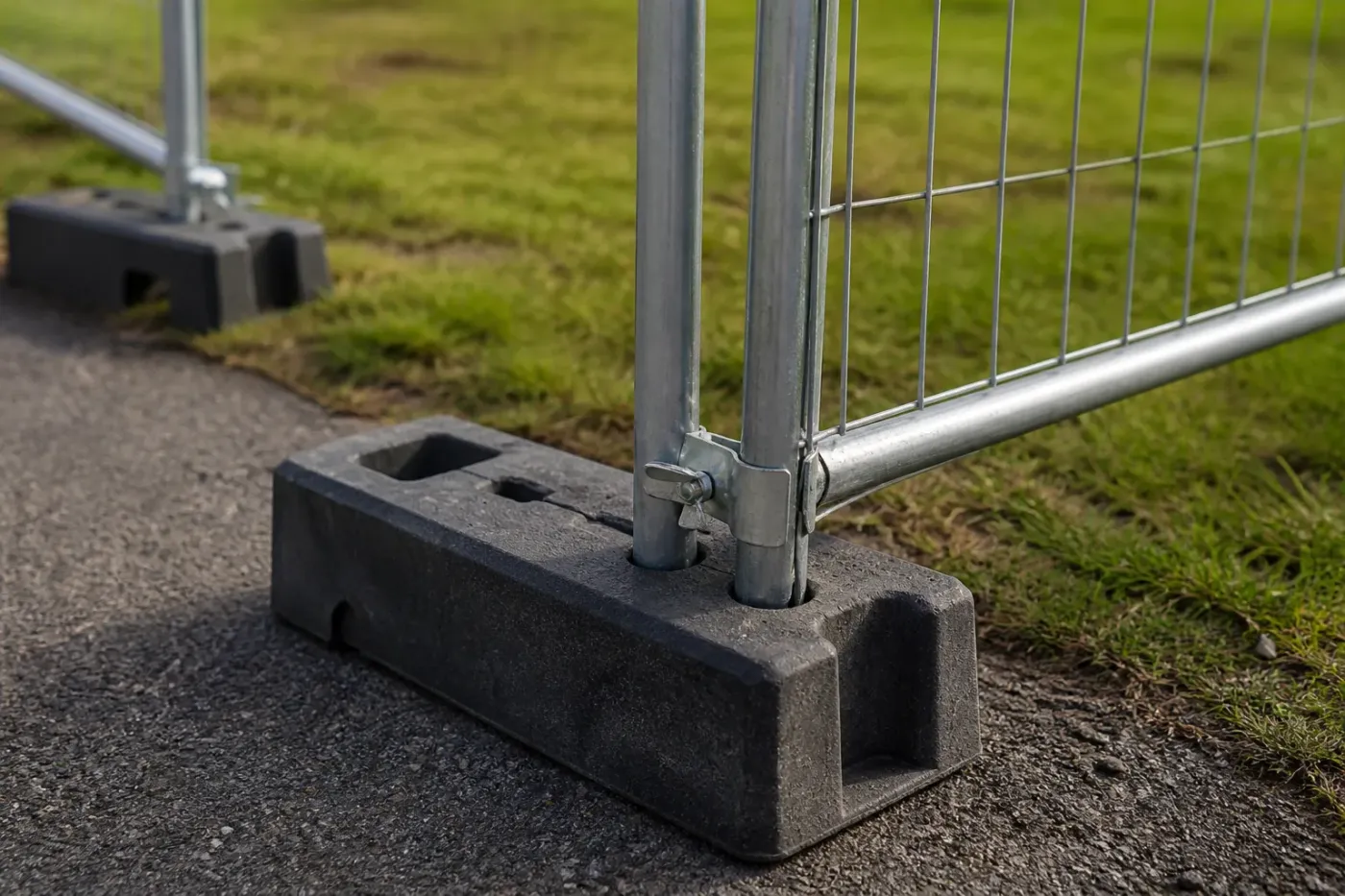
Panels are only one part of the perimeter. Feet, couplers, stabilisers, gates and ballast do the real work. Ignore them and you get the familiar wobble. The wobble becomes a breach. The breach becomes an incident report.
On uneven ground, you need a base that sits flat. On soft ground, you need weight and sometimes ground fixing. On exposed sites, wind becomes the design load. HSE is explicit that barriers and fencing should be risk assessed. Weather and ground conditions are part of that judgement. (hse.gov.uk)
Gate planning is usually where events trip up. A perimeter is not a line. It's a set of controlled openings. Vehicle gates need space to swing or slide. Pedestrian gates need clear approach lanes and lighting. Site gates are part of the same product family for many manufacturers. HERMEQ describes matched vehicle and pedestrian gates as part of an entrance in a site perimeter. (hermeq.com)
It's worth deciding early whether you want full visibility. A mesh line gives good sightlines. It also advertises what's inside. Privacy screening can help. It can also turn a fence into a sail in gusty weather. That trade-off needs someone awake on the risk assessment.
Heras fencing systems are popular because parts interchange. That gives flexibility. It also encourages lazy mixing of components from unknown sources. If the couplers don't seat properly, don't use them.
Security and crowd control are related. They are not the same.
A perimeter can be about ticketing. It can be about safeguarding. It can be about protecting an overnight build from theft.
For event perimeter security, the mesh line is often only the outer layer. You still need lighting, patrolling and clear gate discipline. If you're relying on a fence alone, you're already behind.
For crowds, think about flow. People push where they stop. They climb where they can gather. HSE flags that barriers can influence crowd behaviour. It also points out that the wrong barrier choice can create new risks. (hse.gov.uk)
There's also the uncomfortable point about sightlines. If the main stage is visible from outside, people will try to watch for free. That's not a fencing problem. That's an event design problem. Sometimes the answer is re-orientating the stage. Sometimes it's solid sections in targeted runs.
Use signage properly. “No unauthorised access” is not enough. Mark gates by function. Separate crew access from public access. Make it obvious where a steward should stand.
Logistics: transport, storage and damage control
This is where events differ from a simple building site. The kit doesn't arrive once. It arrives in waves. It often arrives into tight city-centre compounds.
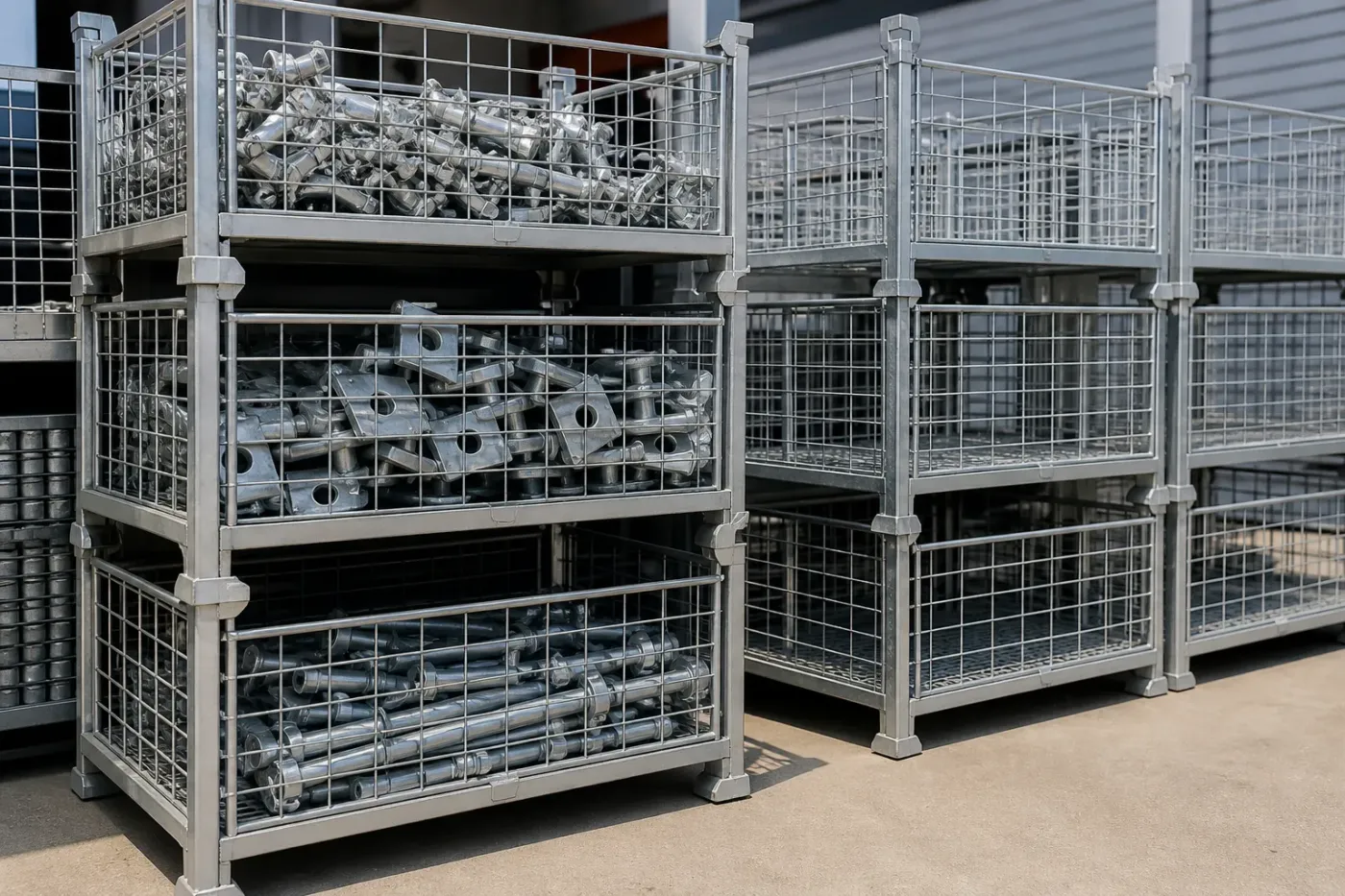
Portable fence panels are easy to carry short distances. They're awkward to handle in bulk without the right stillage and fork access. Bent frames and snapped welds usually come from poor handling. They rarely come from “bad product”.
Lowe Stillages & Cages is not a fencing supplier. It sells the handling kit that keeps temporary sites functioning. Mesh stillages and security stillage units are the unglamorous answer to loose couplers, spare feet, clamps and signage packs.
A few practical points tend to pay off:
- Allocate a dedicated stillage for couplers and fixings
- Keep damaged panels quarantined for inspection
- Store ballast where it can be lifted safely
- Label gate hardware by opening width and location
Think beyond fencing hardware. Catering compounds often need gas bottles. Those shouldn't be rolling around in the back of a van. A proper gas bottle cage keeps storage disciplined. It also makes counts easier during load-out.
Water management matters too. Many sites use IBCs for non-potable supply, grey water or washdown. IBC frames and IBC stillages give you something you can move with a forklift. It also keeps the site cleaner when the ground turns.
Spec it like an event, not like a guess
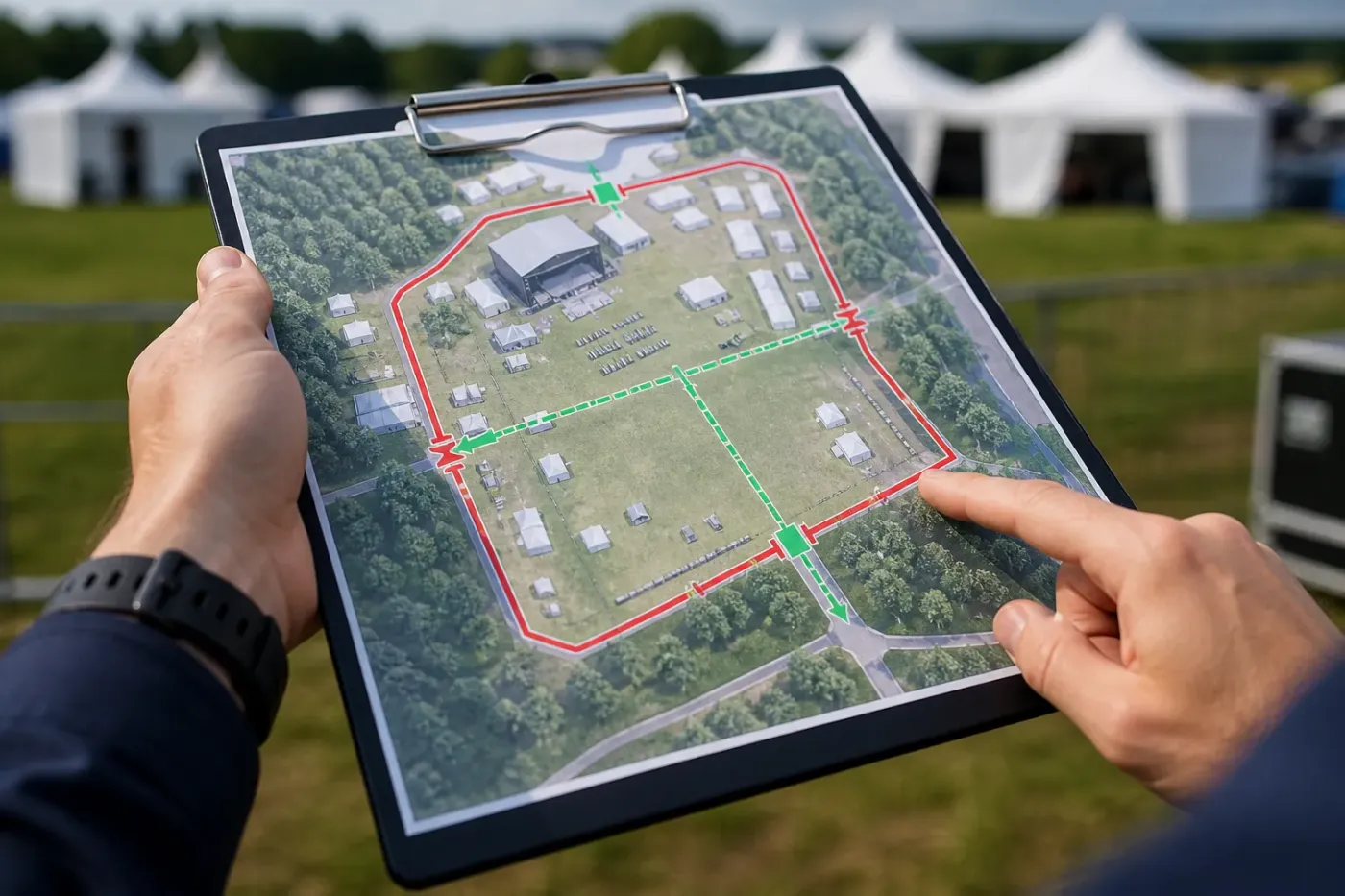
A sensible spec starts with a drawing. HSE recommends a referenced plan that shows fencing lines, entrances and exits as part of venue and site design. That's the professional standard now. (hse.gov.uk)
After that, work through the awkward questions. What happens when the queue doubles. What happens when the ground softens after rain. What happens when the wind direction changes across an open field.
If your build includes significant temporary works, the Construction (Design and Management) Regulations can come into play. It depends on what's being constructed and who's controlling the work. Use the primary text, not hearsay. Construction (Design and Management) Regulations. (legislation.gov.uk)
For broader event guidance, the industry tends to point back to the Purple Guide. It's published by the Events Industry Forum. It's updated over time. It's not a law book. It's still a useful benchmark when you're justifying decisions to a Safety Advisory Group. Purple Guide overview from the Events Industry Forum. (eventsindustryforum.co.uk)
When you need manufacturer detail, use a manufacturer source. HERMEQ sets out mesh fencing, hoarding and gate options within a site perimeter on its own product pages. (hermeq.com)
One last point. Heras fence panels are not a shortcut past competence. Installation quality and day-to-day management decide whether the boundary stays where you put it.
Frequently Asked Questions
Are temporary mesh fence panels suitable for crowd control?
They can help define routes and stop casual access. They're not a replacement for purpose-built crowd barriers near stages or high-pressure areas. Treat them as part of a wider crowd management plan. (hse.gov.uk)
Do I need ballast or stabilisers for a festival perimeter?
Often, yes. Ground conditions and wind exposure decide the answer. A proper risk assessment should cover weather, load and the effect of screening. (hse.gov.uk)
What is the biggest mistake organisers make with temporary event fencing?
They focus on the panel choice and ignore the gates, feet and fixings. Access control fails first. Poor storage and handling then adds damage and delays.
Should event fencing be included on the site plan?
Yes. A clear, referenced plan helps contractors install the right line in the right place. It also helps stewards understand where they should be positioned. (hse.gov.uk)
Is the Purple Guide a legal requirement?
No. It's guidance produced by the Events Industry Forum. It's widely used as a benchmark when planning music and similar events. (eventsindustryforum.co.uk)