Compliance & Traceability by DesignProgramme-Scale Supply & RolloutsUK Engineering That Improves ThroughputLifecycle Support & Matched Spares

Industries Served

Automotive

Automotive supply chains run on returnable packaging that turns up on time, protects finished surfaces and stacks predictably line-side. Lowe designs and manufactures stillages, cages and transit racks around your components, takt time and fork-truck fleet — from painted body panels and bumpers to engines, castings and sub-assemblies.

Every unit is engineered and load-tested to your specification, UKCA-certified and built in the UK, so a national or multi-plant rollout arrives to one repeatable standard.

How Lowe helps

  • Line-side and returnable transit racks synchronised to takt time
  • Foam-lined or profiled stillages that protect painted and finished panels
  • Stackable cages that cube efficiently in trailers and on the plant floor
  • Bespoke frames engineered around your part geometry and handling equipment

Made to order

Discuss your automotive application

Tell us what you handle and how it moves — we'll scope a load-tested, UK-manufactured solution and quote it, usually the same working day.

Prefer to talk? 01889 563 244

Your details

Protected by reCAPTCHA · Privacy · Terms

Designed around the part, not the pallet.

Automotive packaging fails in predictable ways: a trim clip that fouls on a bar, a painted panel that rubs on the return leg, a stillage that stacks cleanly empty and racks over when loaded. Lowe starts from the component and the handling method rather than a catalogue footprint — part geometry, presentation angle, how many the operator takes per hour, and what the truck driver can safely see and reach.

That covers line-side kitting stillages supplying several part types to one build station, paint line jigs carrying panels pre- and post-paint, blanking pallets that flat-pack for panel transport, and component cages with profiled dunnage for interior and trim parts. Press shop, weld, paint and final assembly each get trolleys and fixtures designed for that environment rather than one compromise unit stretched across all four.

Polyurethane dunnage, profiled cradles and lined contact faces are specified wherever a surface is cosmetic or a part marks easily. The aim is that the part arrives in the condition it left in, with no rework and no operator improvising with cardboard.

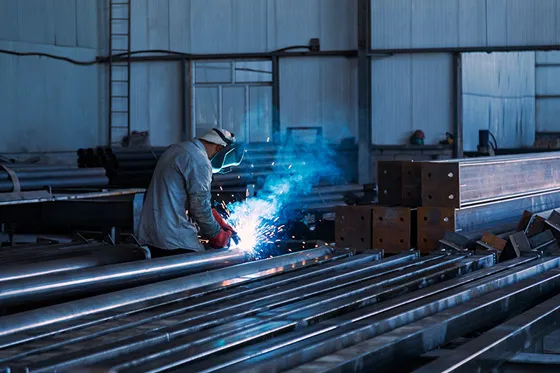
Welding a steel frame
Welded steel construction

Returnable packaging has to survive the loop.

A returnable rack earns its cost over hundreds of round trips, so the design question is the duty cycle, not the first delivery. Units are engineered for repeated fork entry, stacking under load, strapping and rough handling at both ends of the loop, then finished — painted or galvanised — to suit the environment they live in.

Cube matters on the empty leg as much as the full one. Stackable, nesting and flat-packing designs cut the transport cost of returning empties, and stack heights are set against your trailer internal height and racking bay rather than a nominal figure.

Every unit carries permanent identification — unique ID tag, batch and serial number, drawing reference, TARE weight and working load limit where applicable — so a fleet stays auditable and a replacement built two years later matches the one it replaces.

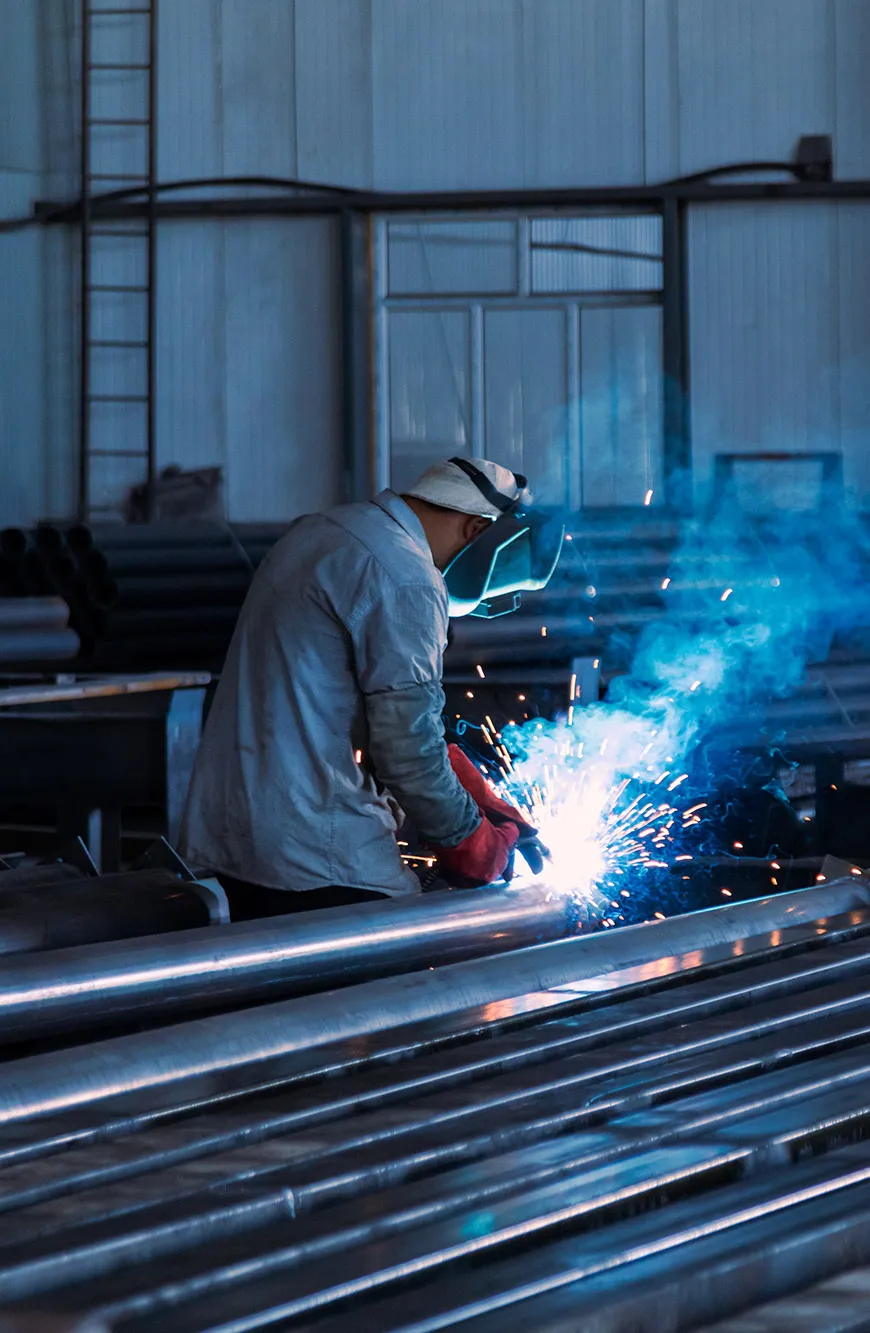
Sparks from a welding torch on steel
Steel fabrication

Built for JIT line-feed.

Automotive schedules leave no slack, so handling equipment is designed for just-in-time supply and lean line-feed: correct presentation height, parts reachable without stretching or bending, one movement per part rather than three, and a footprint that fits the space the line actually has.

Designs are modelled in 3D CAD and, where the load case warrants it, stress-tested by finite element analysis before anything is cut. A prototype or first-off unit is proven on the line, adjusted if it needs it, then locked to a drawing for repeat production — so scaling from a trial cell to a full plant rollout does not restart the design conversation.

Everything is manufactured in Uttoxeter, Staffordshire, and UKCA marked where applicable, which keeps a multi-site rollout to a single repeatable standard.

Measuring a fabricated steel assembly
Checked against the drawing

Recommended ranges

Built for automotive

Browse the full range →

Our capability

Built to your drawing, not a catalogue

Send a drawing, a sample or a photograph of the part. Our engineers size the unit around what it carries and how it is handled, then build it in Staffordshire to a specification you sign off before a single length of steel is cut.

Load-tested · UK-manufactured · certified where required

Talk to an engineer →

Why Lowe

Bespoke to your process

Designed and manufactured around your components, handling equipment and floor layout — made to order or fully bespoke.

Load-rated & stackable

Engineered and load-tested for safe stacking, forklift handling and demanding industrial duty cycles.

Certifiable quality

UK-manufactured to recognised standards, with certification available on custom builds and repeatable weld and build quality.

Fast UK lead times

Manufactured in Uttoxeter, Staffordshire — short lead times and a direct line to the people building your kit.

Questions

Automotive — frequently asked

Can you work from our part CAD or a sample?

Yes. Send 3D models, drawings or a physical sample and the stillage is designed around the part, its presentation angle and your handling equipment. Designs are developed in 3D CAD and, where the load case warrants it, checked by finite element analysis before fabrication starts.

How do you protect painted panels and cosmetic surfaces?

With profiled polyurethane dunnage, lined contact faces and restraint that stops the part moving in transit. Contact points are placed on non-cosmetic areas wherever the geometry allows, and the finish of the stillage itself is specified so it does not shed or mark.

Are automotive stillages certified for crane lifting?

Only if they are designed and specified as lifting equipment. Most automotive stillages are handled by fork truck or tow tug, which makes them work equipment under PUWER. If you need a unit craned, say so at enquiry stage — it is then engineered with rated lifting points, load tested and supplied with the certification LOLER requires.

Can you match a stillage we already run?

Yes. From an existing drawing, or by measuring a sample, units can be built to the same footprint, stack interface and fork centres so they run alongside your existing fleet. Repeat builds are made to the same drawing reference and serialised.

What markings are supplied as standard?

A permanent identification tag or plate carrying serial and batch number, drawing reference, TARE weight and working load limit where applicable. Material certificates, weld records and load test reports are available where your quality system needs them.

Other industries