Compliance & Traceability by DesignProgramme-Scale Supply & RolloutsUK Engineering That Improves ThroughputLifecycle Support & Matched Spares

Industries Served

Nuclear

Regulated nuclear work demands equipment you can evidence: material traceability, load-test records and certified lifting where units are craned. Lowe manufactures stillages, secure cages and certified lifting frames to that standard, with the documentation your quality and audit teams need.

Everything is UK-manufactured and UKCA-certified, engineered and load-tested to specification, with certified LOLER-rated lifting points on the ranges built for overhead handling.

How Lowe helps

  • Certified lifting stillages with LOLER-rated points and test documentation
  • Secure, lockable cages for controlled and high-value stock
  • Traceable, fully documented builds for audit and quality sign-off
  • Bespoke containment engineered to a controlled specification

Made to order

Discuss your nuclear application

Tell us what you handle and how it moves — we'll scope a load-tested, UK-manufactured solution and quote it, usually the same working day.

Prefer to talk? 01889 563 244

Your details

Protected by reCAPTCHA · Privacy · Terms

Every unit starts from a stated design basis.

Handling radioactive and high-hazard material is not a general engineering problem, and the design cannot begin at the steel. Each stillage, cage or frame starts from an agreed design basis: safe working load and duty classification, handling method — fork truck, crane or multi-lift — the operational environment, whether internal, external or a controlled area, and the abnormal loading and foreseeable misuse the unit has to survive.

From that basis the structure is engineered with controlled load paths, defined lifting points and stability features that behave predictably rather than merely adequately. Locking and retention are treated as engineered controls, with secondary restraint where the consequence of release justifies it, rather than as conveniences added at the end of the drawing.

The point of working this way is that behaviour under abnormal or degraded handling is considered before the unit is built, and the reasoning is on record when someone asks for it.

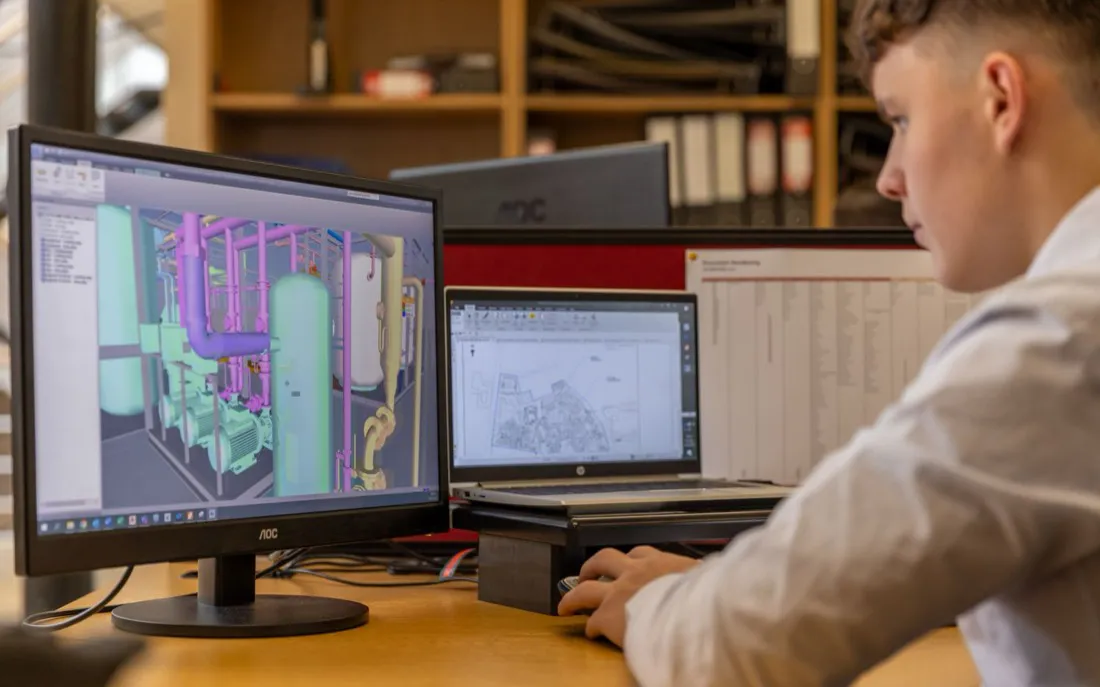
A CAD model of a steel frame on screen
Modelled before it is cut

Compliance and documentation, built in from the start.

Designs are developed to meet UK lifting and work equipment requirements under LOLER and PUWER, with additional alignment to Office for Nuclear Regulation guidance covering nuclear lifting operations, quality assurance and configuration control. Units are UKCA marked where applicable.

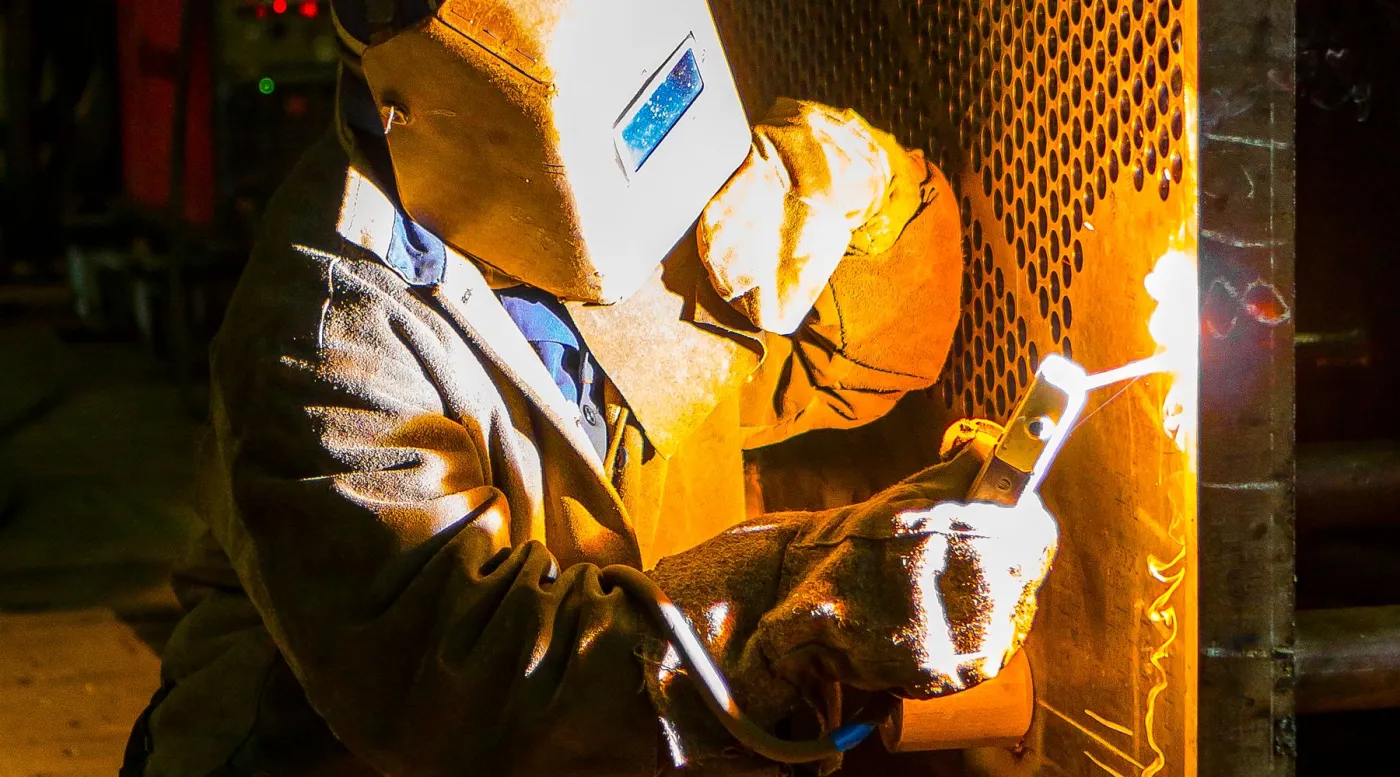
Manufacture is under an ISO 9001 quality management system in the UK, using materials with full traceability, controlled welding procedures carried out by qualified welders, and inspection regimes matched to the specification. Critical welds and structures can be subject to non-destructive testing, dye penetrant testing and proof load testing where the design basis calls for it.

Each unit is supplied as a controlled documentation pack: material certificates, weld maps and welder qualifications, first article and last article inspection records, test reports, permanent ID plates carrying serial number, working load limit, TARE weight and drawing reference, plus inspection, maintenance and handling guidance. It is compiled to support site acceptance and audit, not assembled afterwards.

Close detail of a welded steel joint
Weld detail

Containment, shielding and controlled access.

The range spans the lifecycle: cradles and stillages for fuel and fuel casks with compatibility for standard lifting interfaces; waste cages and bins sized for common waste package formats, including 500-litre drums, with restraint maintained through every handling stage; and lockable racks for tools, instrumentation and controlled components, where traceability and access control matter as much as the steel.

Where higher activity requires it, lead-lined stillages and shielded enclosures are supplied with secure lids, locking and seals for long-term containment. Shielding is specified as a defined engineering element with a stated scope and stated limitations — the dose assessment and the safety case remain with the duty holder.

Where no standard configuration is appropriate, units are engineered to the site requirement, with forklift guides, lifting lugs, access doors, internal restraints and shock-absorbing mounts included as the application demands, and the whole design held under the same assurance framework.

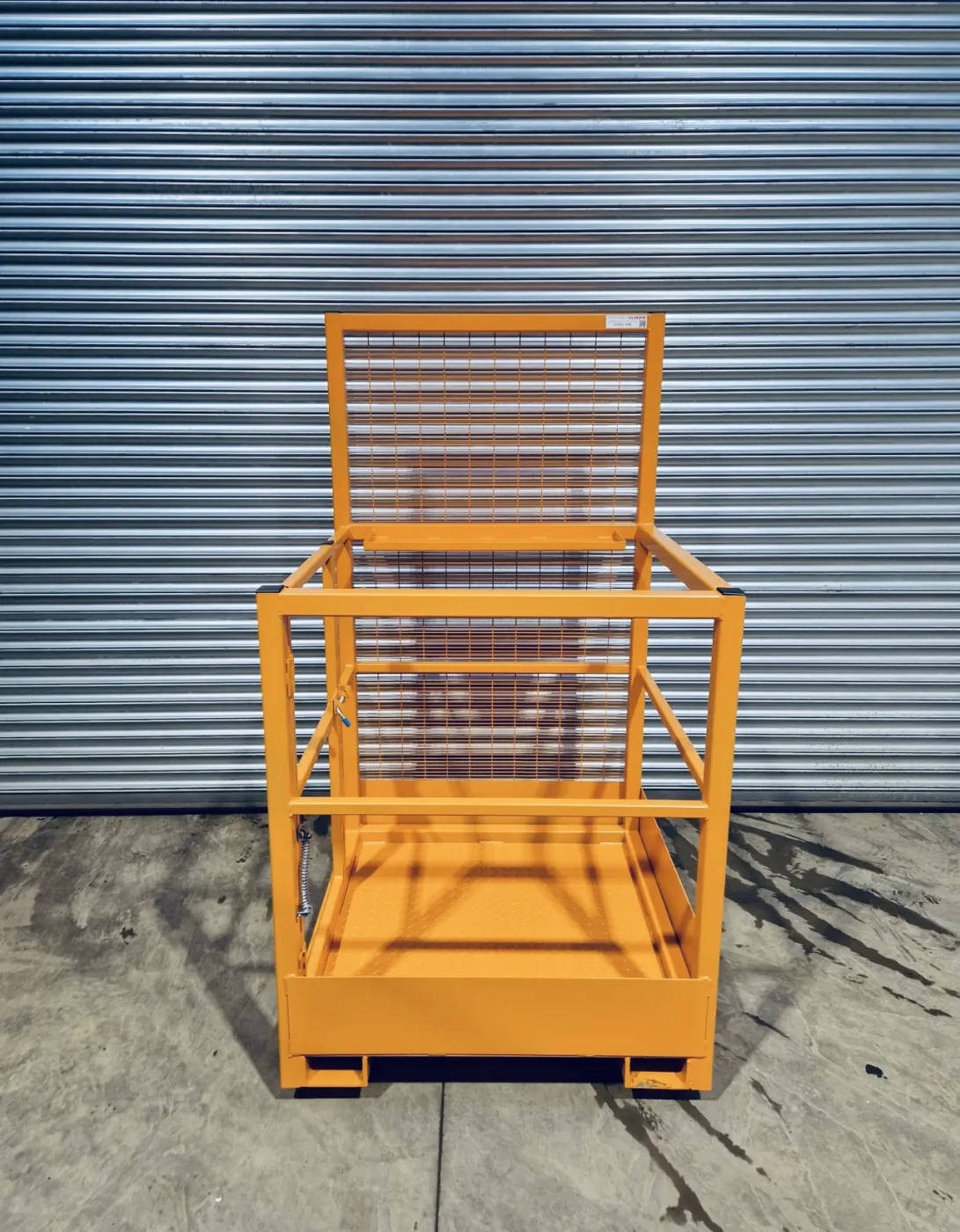
Forklift safety access cage, side view
Access cage — side elevation

Certified Lifting Design

All stillages and cages are UKCA/CE certified and incorporate rated lifting points designed in accordance with LOLER requirements. Each unit is supplied with clearly marked Working Load Limits (WLL), unique identification plates and safety signage.

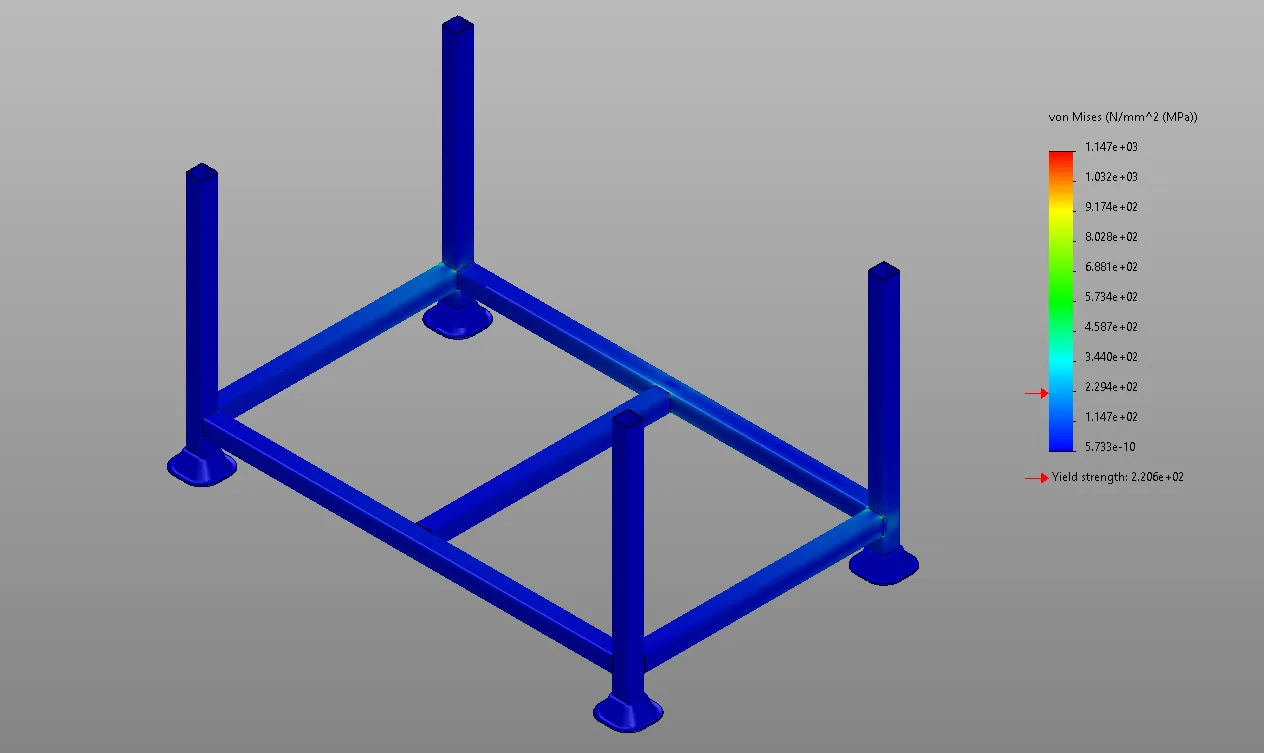
Finite element stress analysis of a stillage frame
Stress analysis before a unit is built

Structural Integrity & Analysis

All designs are validated through engineering analysis, including Finite Element Analysis (FEA) where required, to ensure resistance to heavy loads, impact forces and site-specific conditions. Critical welds and structures can be subject to non-destructive testing and proof load testing to verify real-world performance.

A CAD model of a steel frame on screen
Modelled before it is cut

Traceability & Documentation

Lowe maintains full material and build traceability for every nuclear stillage or cage produced. Lifetime records, including material certificates, weld maps and inspection reports, are compiled to meet ONR and nuclear site requirements for controlled materials tracking.

Close detail of a welded steel joint
Weld detail

Durable Materials & Finishes

Manufactured using high-grade structural steels with options for painted or galvanised finishes to resist corrosion in demanding environments. Designs may include stackable feet, demountable elements or modular interfaces while retaining nuclear-grade robustness.

Forklift safety access cage, side view
Access cage — side elevation

Shielding & Containment Options

For higher-radiation applications, Lowe supplies lead-lined stillages and shielded enclosures. Integrated shielding materials reduce exposure risks while secure lids, locking systems and seals support safe long-term containment of radioactive materials.

Finite element stress analysis of a stillage frame
Stress analysis before a unit is built

Custom Fit & Function

Every solution is engineered around the application. From nuclear fuel cradles for reactor assemblies to pipework section stillages for large plant components, Lowe designs for precise fit and safe handling. Features such as forklift guides, lifting lugs, access doors, internal restraints and shock-absorbing mounts are incorporated as required.

A CAD model of a steel frame on screen
Modelled before it is cut

Fuel Transport Stillages & Cradles

Precision-engineered stillages and cradles for transporting fresh or spent nuclear fuel and fuel casks, providing stable support during lifting and transit with compatibility for standard lifting interfaces.

Close detail of a welded steel joint
Weld detail

Waste Storage Cages & Bins

Secure nuclear waste cages and bins for storing and moving contaminated materials, tools or waste drums. Designs accommodate common waste package formats, including 500-litre drums, with secure restraint during all handling stages.

Forklift safety access cage, side view
Access cage — side elevation

Lifting Frames & Handling Fixtures

Nuclear-grade lifting frames, spreader beams and transport fixtures engineered for critical lifts. Designs incorporate high safety factors, single-failure-proof principles and certified lifting interfaces.

Where a standard solution is not appropriate, Lowe engineers fully bespoke nuclear containers and frames to suit site-specific requirements while maintaining full regulatory compliance.

Lowe Stillages & Cages has a long-standing reputation within the UK nuclear sector, supplying precision-engineered material handling solutions to some of the country's leading power generation facilities. Our nuclear industry stillages and cages are designed to transport, store, and safeguard high-hazard items and miscellaneous waste in strict compliance with safety protocols and regulatory standards.

Finite element stress analysis of a stillage frame
Stress analysis before a unit is built

Built for Safety, Proven by Certification

In an industry where safety, traceability, and documentation are paramount, our solutions are trusted to perform under pressure. Each product is engineered with CE certification, tested under rigorous conditions, and delivered with full technical documentation to ensure traceability from material selection to final assembly.

Whether you’re moving spent components, transporting hazardous materials, or supporting decommissioning logistics, Lowe products are built to exceed expectations.

A CAD model of a steel frame on screen
Modelled before it is cut

Key Features of Our Nuclear Solutions

CE Certified Designs – Full documentation including ID plates, serial numbers, WLL and traceability records.

FEA Proven Safety – All units undergo Finite Element Analysis to simulate stress and real-world impact.

Lifetime Records – Includes weld certifications, inspection reports, material certs, and more.

Load-Tested Equipment – Verified for safe handling of hazardous and high-weight nuclear materials.

Durable Finishes – Optional coatings and finishes to extend product life in demanding environments.

Close detail of a welded steel joint
Weld detail

Typical Products Used in the Nuclear Industry

Waste Transport Stillages – Built for internal movement of classified materials and sealed containers.

Tooling Cages – Lockable storage units for critical equipment and instrumentation.

Custom Frames for High-Hazard Items – Designed per project specification with controlled access and lifting protocols.

Shielded Trolleys & Cradles – Designed for the controlled movement of materials across sensitive plant zones.

Forklift safety access cage, side view
Access cage — side elevation

Our Approach to Nuclear-Grade Engineering

At Lowe, we understand that no two nuclear projects are the same. We collaborate directly with project managers, safety officers, and QA teams to interpret your exact specification. Once requirements are clear, we provide full technical validation through:

Our solutions are always aligned with site-specific regulations and industry best practice.

Finite element stress analysis of a stillage frame
Stress analysis before a unit is built

Compliance, Documentation & Safety Standards

Every nuclear cage or stillage we manufacture includes:

Full traceability of welders, inspectors, and materials

Unique identification labels with serial numbers

Drawing references, TARE and Working Load Limits

Quality Procedures aligned with site documentation policies

Inspection records: FAIR, LAIR, and continuous compliance logs

A CAD model of a steel frame on screen
Modelled before it is cut

Why Lowe for the Nuclear Sector?

Over 25 years’ experience supporting high-security sectors

UK-manufactured, CE-certified products built to nuclear-grade standards

Complete transparency in build quality, testing and documentation

Proven supplier to leading UK nuclear plants and decommissioning sites

Handling radioactive and high-hazard materials is not a general engineering problem — it is a nuclear risk problem. Lowe designs and manufactures engineered stillages, cages and lifting frames specifically for use within nuclear-regulated environments, where failure is unacceptable and scrutiny is guaranteed.

Our stillages are developed to provide controlled containment, predictable handling behaviour and verified structural integrity throughout their working life. Each design begins with a defined design basis covering load case, handling method, lifting interface, operational environment and foreseeable misuse. This ensures that the stillage performs safely not only under normal conditions, but also under abnormal or degraded handling scenarios.

Structural systems are engineered using certified structural steel, controlled weld procedures and defined load paths to prevent distortion, instability or loss of containment. Locking and retention features are designed as engineered controls, not conveniences, with secondary restraint where required to prevent accidental release during lifting, transport or storage. Where radiation shielding or containment enhancement is required, this is incorporated as a defined engineering element with clearly stated scope and limitations.

Close detail of a welded steel joint
Weld detail

1. Defined design basis

Each stillage is engineered against an agreed design basis including:

Safe working load and duty classification

Handling method (forklift, crane, multi-lift scenarios)

Operational environment (internal, external, controlled areas)

Forklift safety access cage, side view
Access cage — side elevation

2. Engineered controls and failure prevention

Controlled load paths and stability features

Positive retention and secondary restraint where required

Defined lifting points and handling interfaces

Prevention of uncontrolled movement or release

Finite element stress analysis of a stillage frame
Stress analysis before a unit is built

5. Documentation for nuclear audit

Delivered as a controlled pack suitable for nuclear environments, supporting:

Every nuclear project is approached with a structured, engineering-led methodology:

Collaborative Design & ReviewLowe works closely with project engineers, safety teams and QA representatives to define requirements and constraints before developing detailed 3D CAD models and conducting design reviews.

Material Selection & CertificationOnly certified, traceable materials are used. Where required, specialist materials such as neutron-absorbing inserts or fire-resistant coatings are incorporated to support safety cases.

Prototype & AnalysisFor complex applications, Lowe supports prototype builds and FEA simulations to validate performance under static, dynamic and environmental loading conditions.

Quality-Controlled FabricationAll fabrication is completed under strict QA/QC procedures by qualified welders using approved welding procedures, with inspection regimes aligned to nuclear standards.

Testing & ValidationEach unit is subject to proof load testing, functional checks and interface trials where applicable. Comprehensive test reports are supplied as part of the project documentation.

Documentation & ApprovalsA complete documentation pack accompanies every nuclear product, simplifying site approval and regulatory sign-off.

A CAD model of a steel frame on screen
Modelled before it is cut

Recommended ranges

Built for nuclear

Browse the full range →

Our capability

Built to your drawing, not a catalogue

Send a drawing, a sample or a photograph of the part. Our engineers size the unit around what it carries and how it is handled, then build it in Staffordshire to a specification you sign off before a single length of steel is cut.

Load-tested · UK-manufactured · certified where required

Talk to an engineer →

Why Lowe

Bespoke to your process

Designed and manufactured around your components, handling equipment and floor layout — made to order or fully bespoke.

Load-rated & stackable

Engineered and load-tested for safe stacking, forklift handling and demanding industrial duty cycles.

Certifiable quality

UK-manufactured to recognised standards, with certification available on custom builds and repeatable weld and build quality.

Fast UK lead times

Manufactured in Uttoxeter, Staffordshire — short lead times and a direct line to the people building your kit.

Questions

Nuclear — frequently asked

What documentation is supplied with a nuclear stillage?

A controlled pack covering material certificates, weld inspection records and welder qualifications, fabrication and inspection documentation, load and proof test reports where applicable, permanent identification carrying serial number, working load limit, TARE weight and drawing reference, and inspection, maintenance and handling guidance. UKCA marking is applied where applicable.

Do you design to ONR expectations?

Designs are aligned with Office for Nuclear Regulation guidance covering nuclear lifting operations, quality assurance and configuration control, and the documentation is compiled to support ONR traceability requirements. Site acceptance and the safety case itself remain with the duty holder — the role of the supplier is to provide equipment and evidence that stand up to that review.

Are lifting frames and cradles certified?

Units designed to be lifted are engineered with rated lifting points, proof load tested and supplied with certification and test records in line with LOLER. In-service thorough examination remains the responsibility of the duty holder under LOLER; the records supplied are structured to support that regime and the lifetime file for the unit.

Can you supply shielded or lead-lined units?

Yes. Lead-lined stillages and radiation-shielded enclosures are supplied where the application requires them, with shielding treated as a defined engineering element with a stated scope and stated limitations. The dose assessment for a given source and operation sits with the site.

How is traceability maintained over the life of the unit?

Through certified materials with full traceability, controlled and recorded weld procedures, and serialised identification for lifecycle control. Lifetime records — material certificates, weld maps and inspection reports — are compiled so a unit can be traced back to its materials and its welders years after delivery.

Other industries