Compliance & Traceability by DesignProgramme-Scale Supply & RolloutsUK Engineering That Improves ThroughputLifecycle Support & Matched Spares

Industries Served

Heavy Manufacturing

On a manufacturing floor, the right stillage keeps work-in-progress moving and takes the load without deforming. Lowe engineers WIP stillages, component cages and trolleys around your process flow, throughput and layout — heavy box-section steel, built to survive demanding duty cycles trip after trip.

From a single bespoke unit to a full returnable fleet, everything is designed, welded and load-tested in-house in the UK.

How Lowe helps

  • Work-in-progress stillages sized to your components and process flow
  • Heavy-duty stillages and trolleys for castings, fabrications and sub-assemblies
  • Partitioned and kitting stillages for order-picking and line-feed
  • Load-tested designs built for high-cycle, everyday industrial use

Made to order

Discuss your heavy manufacturing application

Tell us what you handle and how it moves — we'll scope a load-tested, UK-manufactured solution and quote it, usually the same working day.

Prefer to talk? 01889 563 244

Your details

Protected by reCAPTCHA · Privacy · Terms

Engineered around awkward geometry.

Heavy manufacturing rarely produces parts that suit a rectangular box. Engines, chassis members, cabs, booms, panels and large welded fabrications each have their own centre of gravity, contact points and access for forks or slings, and forcing them into a standard stillage costs either damage or handling time.

Component stillages are built around the assembly they carry, with location features that hold a part in one repeatable position. Multi-use kitting racks feed several part numbers to a line-side operator in the sequence they are fitted. Welded and bolt-on trolley frames move sub-assemblies between cells, and fixtures and jigs hold parts accurately enough that production stays consistent shift to shift.

Where a part is soft, machined or finish-critical, polyurethane dunnage and profiled supports take the contact. Stacking interfaces are designed so loaded units stack predictably rather than approximately.

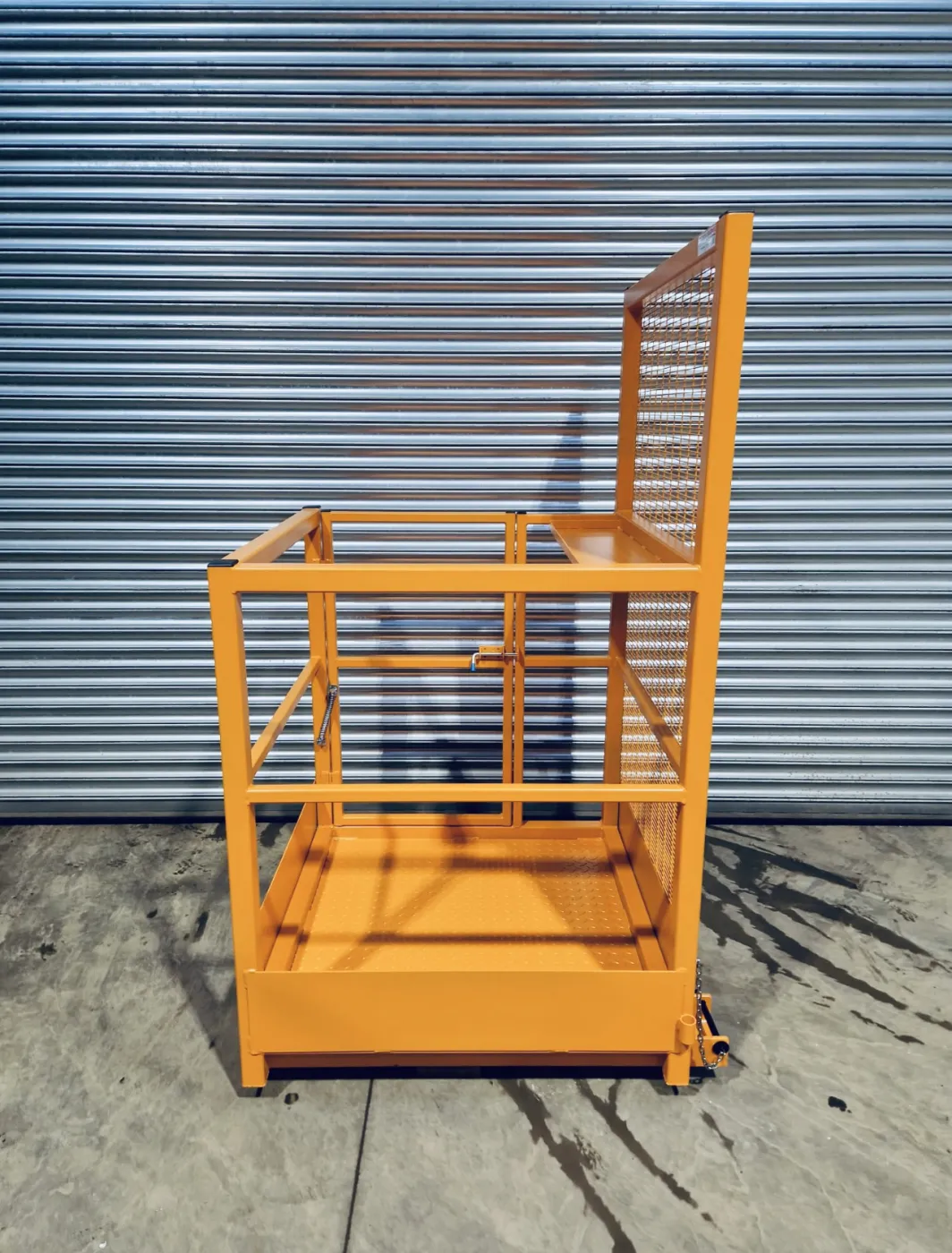
Forklift safety access cage
Forklift safety access cage, built to order

Analysis before fabrication.

Designs are developed in 3D CAD using SolidWorks Premium and shared with your engineers for review before anything is cut, because a change on screen costs nothing and a change after fabrication costs a build.

Where the load case warrants it, finite element analysis is used to stress the design against its intended loading before production, and physical validation follows: load testing, dye penetrant testing of critical welds, and structural checks against the design basis. Weld procedures and paint specification are defined and recorded rather than left to the day.

The output is a documented unit — material certifications and inspection documentation, batch tracking, drawing reference labels, permanent ID tags, TARE weight and load limits, with UKCA marking where applicable.

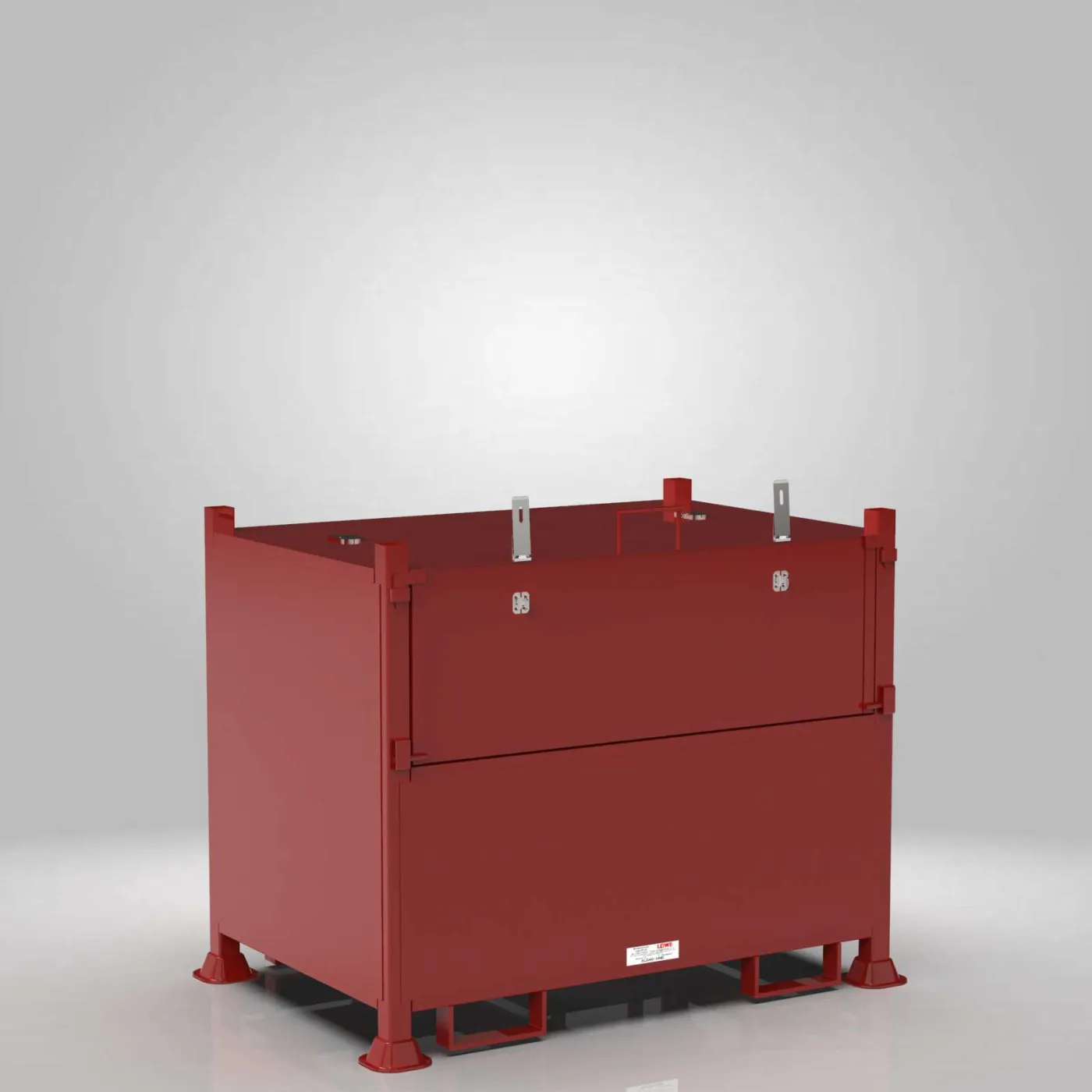
Lockable site stillage in RAL 3020 red
Lockable site stillage · RAL 3020

Specified for the duty cycle.

Factory equipment lives a hard life: daily fork entry, knocks from passing traffic, coolant and swarf, weather in the yard, and years rather than months of service. Designs are specified against that duty cycle instead of a single test lift, which is why bracing, section and finish are set by how the unit will be used, not by what looks adequate when loaded once.

Handling method drives much of the design. Fork pockets, entry heights and stability are set for your trucks. Where a unit is intended to be craned as well as forked, that is a different specification — rated lifting points, load testing and the certification LOLER requires, engineered in from the start rather than welded on later.

Manufacture is in Uttoxeter, Staffordshire, which keeps prototype, first-off and repeat production on the same drawing and the same standard. That matters when a trial of a few units turns into a full returnable fleet.

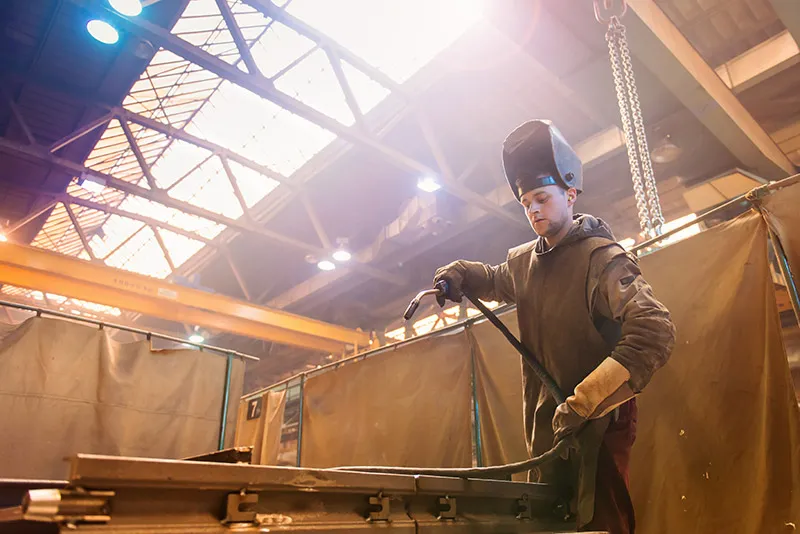
A fabricator welding in a workshop
Fabricated to specification

Recommended ranges

Built for heavy manufacturing

Browse the full range →

Our capability

Built to your drawing, not a catalogue

Send a drawing, a sample or a photograph of the part. Our engineers size the unit around what it carries and how it is handled, then build it in Staffordshire to a specification you sign off before a single length of steel is cut.

Load-tested · UK-manufactured · certified where required

Talk to an engineer →

Why Lowe

Bespoke to your process

Designed and manufactured around your components, handling equipment and floor layout — made to order or fully bespoke.

Load-rated & stackable

Engineered and load-tested for safe stacking, forklift handling and demanding industrial duty cycles.

Certifiable quality

UK-manufactured to recognised standards, with certification available on custom builds and repeatable weld and build quality.

Fast UK lead times

Manufactured in Uttoxeter, Staffordshire — short lead times and a direct line to the people building your kit.

Questions

Heavy Manufacturing — frequently asked

Can you design from our 3D models?

Yes. Native or neutral CAD formats, 2D drawings, or a sample part all work as a starting point. Designs are developed in 3D CAD with review stages built in, so your engineers see and sign off the model before fabrication starts.

How is the structure sized?

From the design basis — the load, how it sits, how the unit is handled, the environment it works in, the duty cycle and foreseeable misuse. That determines the structure, not a nominal capacity. Where the case warrants it the design is checked by finite element analysis and proven by load testing.

Can one stillage be both forked and craned?

It can, but only if it is designed for both from the start. Crane handling makes the stillage lifting equipment, which means rated lifting points, load testing and certification under LOLER. Retro-fitting lifting eyes to a unit designed for fork handling is not a safe substitute.

What documentation comes with a build?

Material certifications and inspection documentation, weld procedure and paint specification records, load and dye penetrant test results where specified, drawing reference and batch tracking, and permanent ID tags showing TARE weight and load limits. UKCA marking is applied where applicable.

Can you scale from a trial to a full fleet?

That is the usual route. A prototype or first-off unit is proven on your floor, adjusted if it needs it, then frozen to a drawing so every subsequent batch is identical and serialised. Repeat and scaled orders run from that same reference.

Other industries