Compliance & Traceability by DesignProgramme-Scale Supply & RolloutsUK Engineering That Improves ThroughputLifecycle Support & Matched Spares

Industries Served

Warehouse & Logistics

Warehousing and logistics live or die on cube, throughput and stock control. Lowe builds stackable post pallets, mesh cage pallets and collapsible units that maximise every trailer and rack bay, move fast under a forklift and fold flat on the return leg.

Standard sizes ship from stock; bespoke footprints are engineered to your racking, MHE and product — UK-manufactured and UKCA-certified.

How Lowe helps

  • Stackable post pallets and cage pallets that cube efficiently in racking and trailers
  • Collapsible units that fold flat to cut return-transport cost
  • Open-mesh stillages for fast visual stock checks and pick-face storage
  • Warehouse trolleys for quick, safe movement of goods around site

Made to order

Discuss your warehouse & logistics application

Tell us what you handle and how it moves — we'll scope a load-tested, UK-manufactured solution and quote it, usually the same working day.

Prefer to talk? 01889 563 244

Your details

Protected by reCAPTCHA · Privacy · Terms

Cube is most of the argument.

In a distribution operation the stillage is not the cost — the air around it is. A footprint that wastes space against a racking upright, or a stack height that lands just above what the trailer will take, is paid for on every pallet position and every trip for the life of the fleet.

Units are sized to the constraints that actually bind: racking beam pitch and clear entry, trailer internal width and height, fork centres and mast lift on your material handling equipment, and the stack height your operators can safely build. Standard footprints suit most operations; where they do not, the footprint is engineered rather than rounded to a catalogue size.

On the return leg, cube is the whole cost. Collapsible post pallets fold flat, and stackable and nesting designs cut the volume of empties going back — which is usually where a returnable fleet either pays for itself or does not.

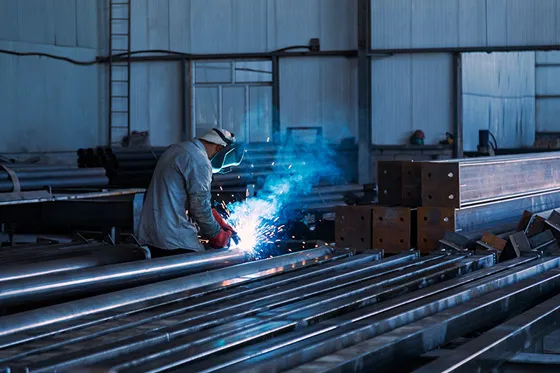
Welding a steel frame
Welded steel construction

Specified for the handling your site actually does.

Mesh, sheeted, open-front and drop-front each solve a different problem. Mesh gives visual stock checks and airflow; sheeted gives containment and protection for small or loose items; a drop or half-drop front gives pick-face access without unloading the unit. The right answer depends on whether it sits in racking, on a pick face, on a trailer, or all three in the same week.

High-turnover storage takes constant handling, so transport cages are built for repeated fork entry and knocks rather than occasional use, and warehouse trolleys are specified for manual movement over the distances and floor surfaces your site actually has. Castors, handle position and push height matter more here than steel weight.

Identification is marked as standard — TARE weight, working load limit and drawing number — so stock control, safe stacking and weight checks work without anyone having to guess.

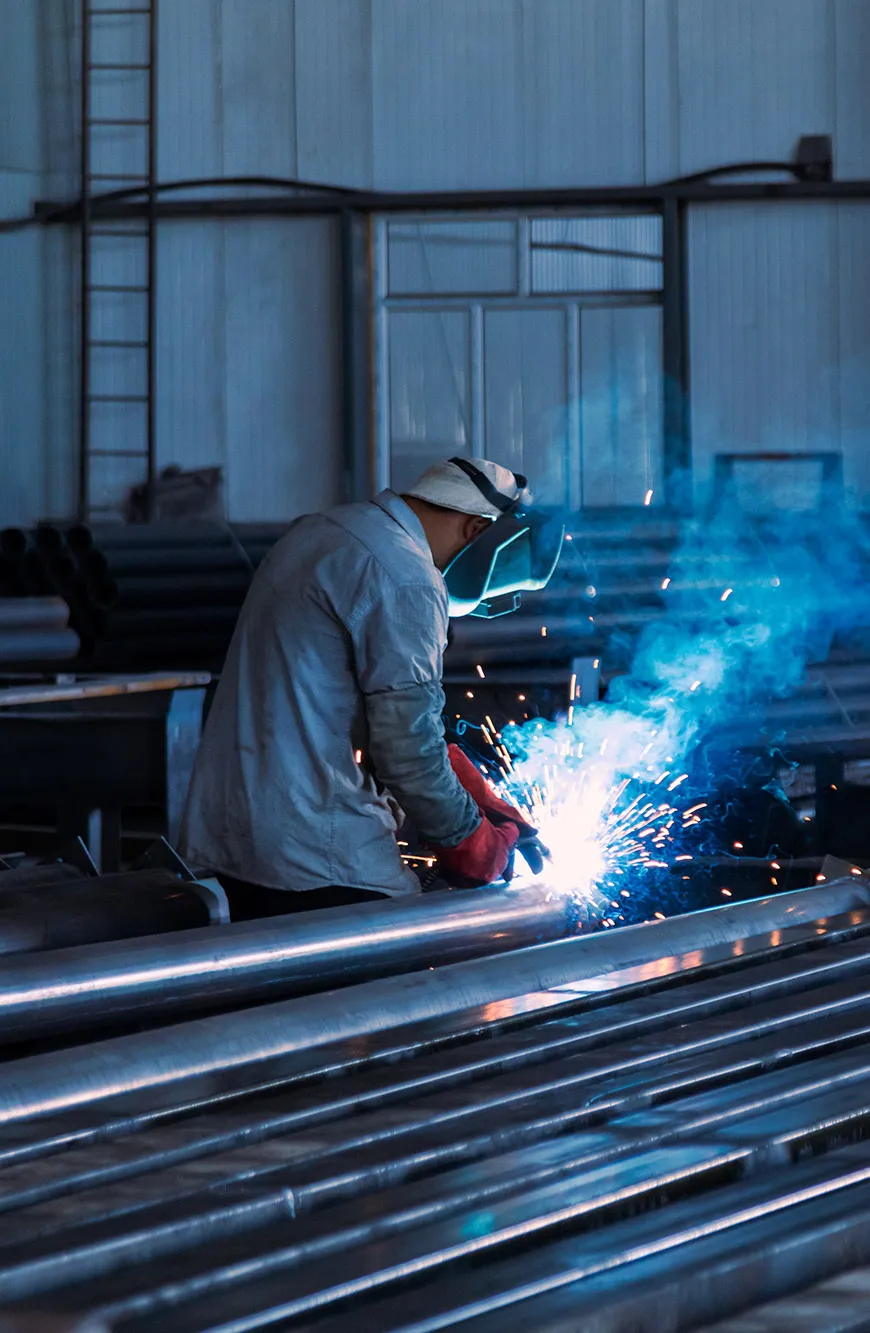
Sparks from a welding torch on steel
Steel fabrication

One standard across a network.

National and regional distribution centres, third-party logistics providers, e-commerce fulfilment operations and retail and supermarket logistics hubs all share the same problem: equipment drifts. Sites buy locally, footprints stop matching, and stacking becomes unpredictable across the network.

Building to a controlled drawing reference fixes that. Units manufactured in Uttoxeter, Staffordshire to the same drawing stack and interlock with the ones ordered two years earlier, which keeps a network on one handling standard and makes damage, loss and replacement straightforward to account for.

If the day-to-day problem is damaged goods in transit, space you cannot recover, or handling that takes too many touches, those are design problems — and they are usually cheaper to solve in the stillage than in the process built around it.

Measuring a fabricated steel assembly
Checked against the drawing

Recommended ranges

Built for warehouse & logistics

Browse the full range →

Our capability

Built to your drawing, not a catalogue

Send a drawing, a sample or a photograph of the part. Our engineers size the unit around what it carries and how it is handled, then build it in Staffordshire to a specification you sign off before a single length of steel is cut.

Load-tested · UK-manufactured · certified where required

Talk to an engineer →

Why Lowe

Bespoke to your process

Designed and manufactured around your components, handling equipment and floor layout — made to order or fully bespoke.

Load-rated & stackable

Engineered and load-tested for safe stacking, forklift handling and demanding industrial duty cycles.

Certifiable quality

UK-manufactured to recognised standards, with certification available on custom builds and repeatable weld and build quality.

Fast UK lead times

Manufactured in Uttoxeter, Staffordshire — short lead times and a direct line to the people building your kit.

Questions

Warehouse & Logistics — frequently asked

Do warehouse stillages need to comply with LOLER?

Not if they are only ever handled by fork truck or pallet truck. In that case the stillage is work equipment under PUWER and the lifting equipment is the truck. LOLER applies when the unit itself is lifted, for example slung from a crane by rated lifting points. If you intend to lift a stillage that way, it has to be specified as a certified lifting stillage from the outset — designed, load tested and documented for it.

Are collapsible post pallets worth the extra cost?

They pay back where the return leg is long or empties occupy storage you need, because folding flat cuts both the volume of the empty journey and the yard space empties take up. Where units stay on one site and take heavy daily abuse, a rigid stillage usually gives longer service life for less money.

Mesh or sheeted?

Mesh where you want to see stock, keep airflow and cut weight. Sheeted where contents are small, loose, dusty or need protecting from knocks and the weather. Mixed builds are common — a sheeted base with mesh sides, or sheeted sides with a mesh lid — where you need both at once.

Can you match our existing racking and fleet?

Yes, and it is worth doing properly. Send racking beam pitch and clear opening, trailer internal dimensions, fork centres and the stack height you want to run, and units are sized against those rather than to a nominal footprint.

What identification comes on the unit?

TARE weight, working load limit and drawing number as standard, with serial numbers where you need to track individual units through a network. UKCA marking is applied where applicable.

Other industries