Compliance & Traceability by DesignProgramme-Scale Supply & RolloutsUK Engineering That Improves ThroughputLifecycle Support & Matched Spares

Industries Served

Marine

Marine and shipbuilding move heavy, awkward and high-value loads that are often lifted by crane. Lowe engineers certified lifting stillages, A-frame stillages and heavy-duty cages that keep panels, sections and components secure through storage, lifting and transit.

Every unit is UK-manufactured, UKCA-certified and load-tested, with certified LOLER-rated lifting points on the ranges built for overhead handling.

How Lowe helps

  • Certified lifting stillages with LOLER-rated points for crane handling
  • A-frame stillages that cradle panels, sheets and large sections
  • Heavy-duty cages for secure storage and transit of components
  • Bespoke frames engineered to your load and lifting method

Made to order

Discuss your marine application

Tell us what you handle and how it moves — we'll scope a load-tested, UK-manufactured solution and quote it, usually the same working day.

Prefer to talk? 01889 563 244

Your details

Protected by reCAPTCHA · Privacy · Terms

Protecting high-finish components.

Marine work moves parts that are large, awkward and cosmetically unforgiving. A scratch in a finished panel or a mark on a fitted door is rework at the worst point in the build, so the design starts from how the part is supported and restrained rather than from how much it weighs.

Custom dunnage takes the contact — profiled supports, lined faces and restraint that stops movement in transit and during lifting. Component transport frames carry panels, doors, glass and hull parts through the build; mould stillages and build cradles support large, heavy composite structures; and demould and paint jigs handle parts at the stages where they are most vulnerable.

Contact points are placed on non-visible areas wherever the geometry allows, which is normally a conversation with the production team rather than something that can be read off a drawing.

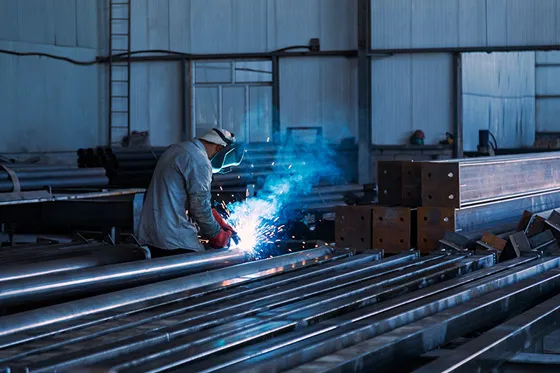
Welding a steel frame
Welded steel construction

Large format, moved often.

A yard has its own constraints — door heights, aisle widths, crane coverage, floor condition — and equipment that ignores them creates its own bottleneck. Designs are sized for the space available and for manoeuvrability within a large production environment, so a heavy unit can still be positioned by the people who have to position it.

Kitting trolleys deliver tools and assemblies line-side at each build stage, and shutter transport jigs and stage-specific fixtures move parts between operations. The aim is fewer handling operations per part, and no lifting or twisting that the design could have designed out.

These are high-load, repeat-use units, so structure, castors and running gear are specified for daily service over years rather than for a single move.

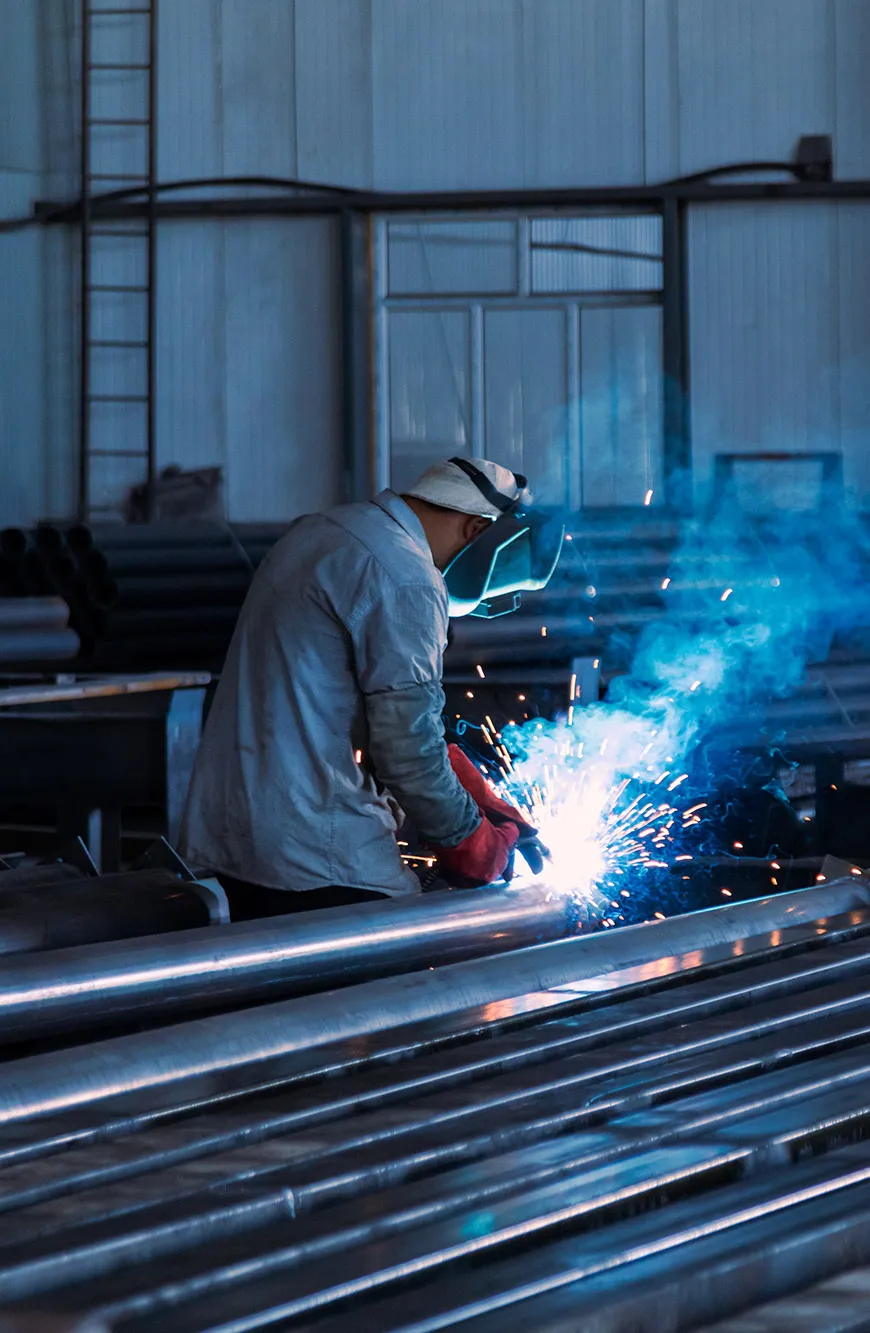
Sparks from a welding torch on steel
Steel fabrication

Lifting, testing and traceability.

Where a unit is designed to be craned — and in a shipbuilding environment many are — it is engineered as lifting equipment with rated lifting attachments, load tested and supplied with the certification LOLER requires. Units meant for fork or manual handling are specified and marked for that instead.

Designs are validated by load testing and, where the load case warrants it, finite element analysis for stress and stability. Weld certifications and inspection logs are recorded, and materials are traceable with serial number mapping so an individual unit can be identified years later.

Every unit carries a drawing number, working load limit and TARE label, is finished with corrosion-resistant treatments suited to a coastal or yard environment, and is UKCA marked where applicable. Manufacture is in Uttoxeter, Staffordshire.

Measuring a fabricated steel assembly
Checked against the drawing

Recommended ranges

Built for marine

Browse the full range →

Our capability

Built to your drawing, not a catalogue

Send a drawing, a sample or a photograph of the part. Our engineers size the unit around what it carries and how it is handled, then build it in Staffordshire to a specification you sign off before a single length of steel is cut.

Load-tested · UK-manufactured · certified where required

Talk to an engineer →

Why Lowe

Bespoke to your process

Designed and manufactured around your components, handling equipment and floor layout — made to order or fully bespoke.

Load-rated & stackable

Engineered and load-tested for safe stacking, forklift handling and demanding industrial duty cycles.

Certifiable quality

UK-manufactured to recognised standards, with certification available on custom builds and repeatable weld and build quality.

Fast UK lead times

Manufactured in Uttoxeter, Staffordshire — short lead times and a direct line to the people building your kit.

Questions

Marine — frequently asked

How do you stop cosmetic damage to finished panels?

Profiled dunnage and lined contact faces on non-visible areas of the part, plus restraint that stops it moving in transit — most cosmetic damage happens because a part shifted, not because it was set down badly. Where a part is unusually vulnerable, the support arrangement can be proven on a first-off unit before a batch is committed.

Can you design around our build sequence?

That is normally the right way to do it. Demould, transport, paint, fit-out and final assembly each present the part differently, and a jig that suits one stage often obstructs the next. Working from your sequence, we can design stage-specific units or one frame that serves several stages, whichever costs less overall.

Are marine stillages suitable for crane lifting?

Only where they are designed and certified for it. A unit intended to be craned is engineered with rated lifting attachments, load tested and supplied with certification under LOLER. In-service thorough examination of lifting equipment remains the duty of the yard under LOLER; the documentation supplied supports that regime.

What finishes suit a coastal yard?

Galvanised or painted corrosion-resistant treatments, specified against the exposure — inside a shed, in an open yard, or moving between the two — and the service life you expect. Finish is decided alongside the structural detailing so water drains and joints stay inspectable.

Can you handle both one-offs and repeat fleets?

Yes. A single cradle for a specific mould and a repeat run of kitting trolleys are the same engineering process at different volumes. One-offs are engineered to the part; repeat builds are frozen to a drawing reference and serialised so later batches match units already in service.

Other industries